
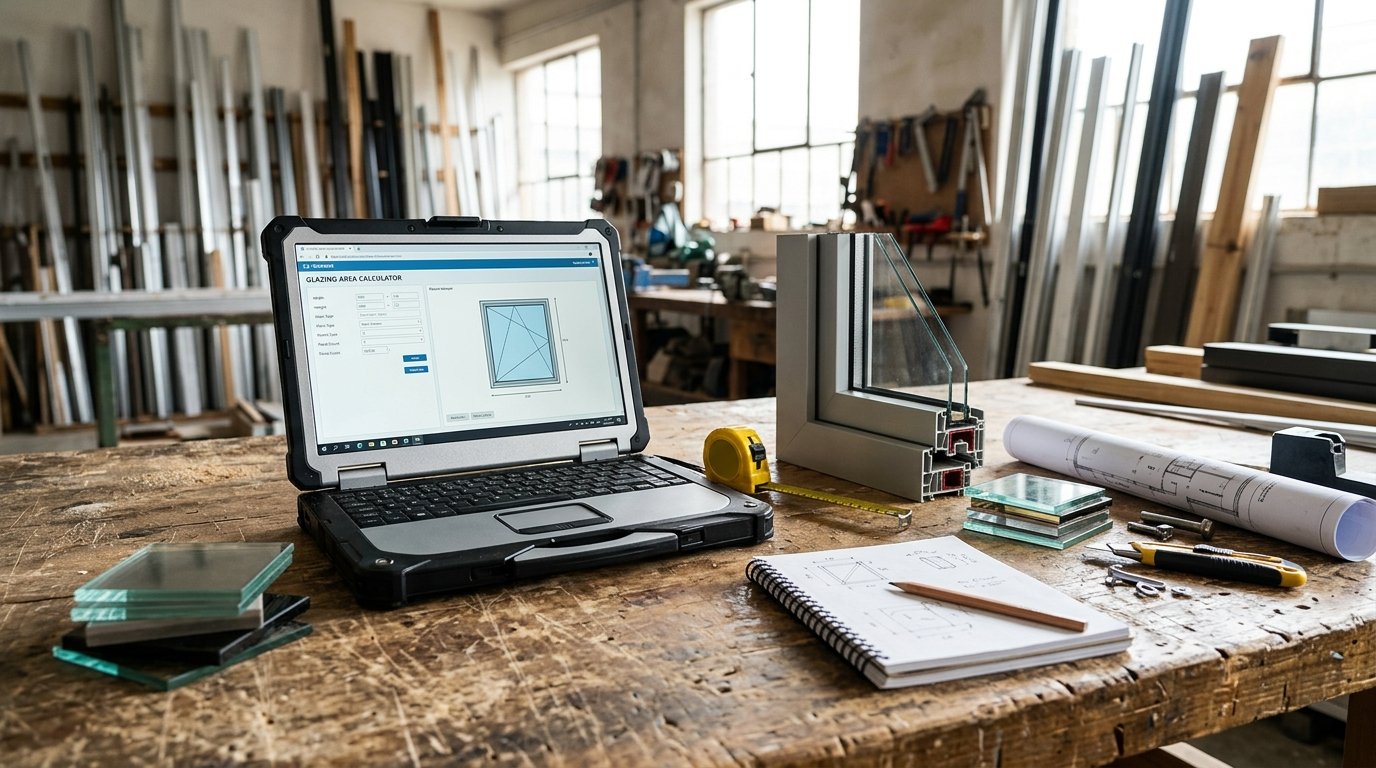
Glazing Area (Windows) Calculator: Estimate Glass Area, Weight & Costs
Windows are one of the most important features of any building. They bring natural light, ventilation, and aesthetic appeal. But they also represent a significant investment, and the glazing area directly affects thermal performance, structural loads, and cost. Whether you are replacing a single window, specifying glazing for a new build, or estimating materials for a renovation, accurate calculation of glass area and weight is essential.
Our Glazing Area Calculator is a free online tool that takes the guesswork out of window glazing estimation. It helps you calculate the visible glass area per window, total glass area, glass mass, and total cost based on window dimensions, frame width, glazing type, and local pricing. It supports single, double, triple, energy-efficient, acoustic, and safety glazing. Whether you are a builder, architect, glazier, or homeowner, this calculator gives you the numbers you need to plan with confidence.
In this guide, we will show you how to use the calculator, explain each input and output, provide real-world examples, and answer common questions. We will also share tips to ensure your glazing project is accurate, compliant, and cost-effective.
Glazing Area (Windows)
Construction CalculatorWindow glazing: pane count, glass area, glazing type, frames and cost.
What is the Glazing Area Calculator?
The Glazing Area Calculator is a free online tool that calculates the visible glass area and weight of windows. It supports multiple windows with identical dimensions, user-defined frame width, various glazing types (single, double, triple, energy-efficient, acoustic, safety), and two pricing modes: per m² of glass or per window. It also includes an installation cost per window. The calculator returns:
- Glass area per window
- Total glass area
- Glass mass
- Number of windows
- Glazing cost
- Installation cost
- Grand total
The tool is part of a suite of materials and quantities calculators available on our website. For related calculations, you can use our Window U-Value Calculator, Glass Weight Calculator, Glass Thickness Selection Calculator, and Double / Triple Glazed Unit Sizing Calculator.
Why Accurate Glazing Area Calculation Matters
Glazing area is more than just a number for ordering glass. It affects every aspect of a window project, from thermal performance to structural design to cost. If you underestimate the glass area, you may under-order materials or misjudge the weight. If you overestimate, you waste money and resources. Accurate calculation ensures:
Correct Material Ordering
Glass is cut to size and cannot be returned. If you order the wrong size or quantity, you incur additional costs and delays. The Glazing Area Calculator helps you determine the exact glass area per window and total area for your order.
Thermal Performance
The ratio of glass to frame area affects the overall U-value of a window. Larger glass areas mean more heat loss (or gain) and require higher-performance glazing to meet building regulations. Use our Window U-Value Calculator to assess whole-window performance.
Structural Loads
Glass is heavy. A 1.2 m × 1.4 m double glazed unit with 4 mm panes weighs approximately 33 kg. If you have 20 such windows, the total glass weight exceeds 660 kg. Frames, lintels, and fixing systems must be designed to carry this load. Our calculator provides the mass so you can plan accordingly. For standalone glass weight, use our Glass Weight Calculator.
Cost Estimation
Glass is priced per square meter or per unit. Knowing the exact area helps you compare quotes, negotiate with suppliers, and avoid overpaying. The calculator allows you to enter local prices and see the total cost, including installation.
Compliance
Building regulations specify minimum glazing areas for natural light and ventilation. They also set maximum U-values and require safety glass in certain locations. Accurate calculation helps you demonstrate compliance.
Professionalism
Credible estimates build trust with clients, contractors, and suppliers. The Glazing Area Calculator helps you present accurate figures quickly.
For more information on glazing standards, you can refer to Wikipedia’s article on architectural glass or the Glass and Glazing Federation (GGF).
How to Use the Glazing Area Calculator
Using the calculator is straightforward. Here is a breakdown of each field.
1. Windows
- Number of windows: Enter the total number of identical windows. The calculator multiplies area, mass, and cost by this count.
- Window width: Enter the overall width of one window, including the frame, in meters or inches.
- Window height: Enter the overall height of one window, including the frame, in meters or inches.
2. Frame
- Frame material: Select PVC, aluminium, timber, wood-aluminium, or steel. This is for navigation only; enter the price for your chosen frame in the pricing section.
- Frame width: Enter the width of the frame in meters or inches. The frame reduces the visible glass area. A typical frame width is 60 mm (0.06 m). The calculator subtracts twice the frame width from the overall width and height to determine the glass dimensions.
3. Glazing
- Glazing: Select the glazing type: single glazed, double glazed, triple glazed, energy-efficient (low-E, argon), acoustic laminated, or safety / toughened. This is for navigation; enter the price for your chosen glazing in the pricing section.
- Total glass thickness: Enter the sum of all glass panes, excluding cavities, in meters or inches. For example, single glazing might be 4 mm (0.004 m), double glazing 8 mm (0.008 m), triple glazing 12 mm (0.012 m). This value is used to calculate glass mass.
- Glass density: Enter the density of glass in kg/m³. Float glass is approximately 2500 kg/m³. Check with your supplier for specialty glass.
4. Pricing
- Price mode: Select “Per m² of glass” or “Per window”. Only the selected mode is used.
- Price per m²: Enter the local price per square meter of glazing for the chosen type. Used when “Per m² of glass” is selected.
- Price per window: Enter the local price per window, including frame and glazing. Used when “Per window” is selected.
- Installation price per window: Enter the local installation rate per window.
Once you enter all values, the calculator instantly displays glass area per window, total glass area, glass mass, number of windows, glazing cost, installation cost, and grand total.
Understanding the Calculations
To make the most of the calculator, it is important to understand each output and the underlying formulas.
- Glass area per window: (window width − 2 × frame width) × (window height − 2 × frame width). The calculator enforces a minimum glass dimension of 0.05 m to avoid negative values for very small windows.
- Total glass area: glass area per window × number of windows.
- Glass mass: total glass area × total glass thickness × density. This gives the mass of glass only, excluding frames and hardware.
- Number of windows: The count you entered, displayed for reference.
- Glazing cost: If price mode is “Per m² of glass”, cost = total glass area × price per m². If price mode is “Per window”, cost = number of windows × price per window.
- Installation cost: number of windows × installation price per window.
- Grand total: glazing cost + installation cost.
Understanding these components helps you interpret the results and adjust your order. For more information on glazing design standards, you can refer to Wikipedia’s article on architectural glass or the National Fenestration Rating Council (NFRC).
Example Calculations
Let’s run through two examples to see how the calculator works in different scenarios.
Example 1: Double Glazed PVC Windows, 1.2 m × 1.4 m, 10 Units, Priced per m²
Inputs:
- Number of windows: 10
- Window width: 1.2 m
- Window height: 1.4 m
- Frame material: PVC
- Frame width: 0.06 m
- Glazing: Double glazed
- Total glass thickness: 0.008 m (8 mm, 2 × 4 mm)
- Glass density: 2500 kg/m³
- Price mode: Per m² of glass
- Price per m²: $80
- Installation price per window: $50
Calculations:
- Glass width = 1.2 − 2 × 0.06 = 1.2 − 0.12 = 1.08 m
- Glass height = 1.4 − 2 × 0.06 = 1.4 − 0.12 = 1.28 m
- Glass area per window = 1.08 × 1.28 = 1.3824 m²
- Total glass area = 1.3824 × 10 = 13.824 m²
- Glass mass = 13.824 × 0.008 × 2500 = 276.48 kg
- Glazing cost = 13.824 × $80 = $1,105.92
- Installation cost = 10 × $50 = $500
- Total = $1,105.92 + $500 = $1,605.92
Example 2: Triple Glazed Aluminium Windows, 0.9 m × 2.0 m, 5 Units, Priced per Window
Inputs:
- Number of windows: 5
- Window width: 0.9 m
- Window height: 2.0 m
- Frame material: Aluminium
- Frame width: 0.05 m
- Glazing: Triple glazed
- Total glass thickness: 0.012 m (12 mm, 3 × 4 mm)
- Glass density: 2500 kg/m³
- Price mode: Per window
- Price per window: $450
- Installation price per window: $75
Calculations:
- Glass width = 0.9 − 2 × 0.05 = 0.9 − 0.10 = 0.80 m
- Glass height = 2.0 − 2 × 0.05 = 2.0 − 0.10 = 1.90 m
- Glass area per window = 0.80 × 1.90 = 1.52 m²
- Total glass area = 1.52 × 5 = 7.6 m²
- Glass mass = 7.6 × 0.012 × 2500 = 228 kg
- Glazing cost = 5 × $450 = $2,250
- Installation cost = 5 × $75 = $375
- Total = $2,250 + $375 = $2,625
These examples show how different window sizes, frame widths, glazing types, and pricing modes affect the total cost and glass weight.
Benefits of Using the Glazing Area Calculator
Tips for Accurate Glazing Area Estimation
- Measure the window accurately: Double-check width and height, including the frame. For irregular windows, consult a glazier.
- Account for frame width: The frame reduces the visible glass area. Measure the frame width precisely.
- Choose the right glazing type: Single glazing is cheapest but least efficient. Double and triple glazing improve thermal performance. Energy-efficient, acoustic, and safety glazing add cost but provide specific benefits.
- Calculate total glass thickness correctly: Sum all panes, excluding cavities. For example, double glazing with two 4 mm panes has a total glass thickness of 8 mm.
- Use the correct density: Float glass is approximately 2500 kg/m³. Specialty glass may differ.
- Select the right pricing mode: Per m² is common for glass-only orders. Per window is useful for complete window replacements.
- Include installation: Installation is a significant cost. Enter a realistic local rate.
- Verify with a professional: For large or complex projects, have a glazing contractor verify the design and quantities.
For more information on glazing standards, you can refer to Wikipedia’s article on architectural glass or the Glass and Glazing Federation (GGF).
Common Mistakes to Avoid
- Forgetting to subtract the frame. The frame reduces the glass area. If you use the overall window dimensions, you overestimate glass area.
- Using the wrong glass thickness. Thickness affects weight and cost. Double-check the sum of panes.
- Ignoring the number of windows. The calculator multiplies by count, but if you calculate manually, don’t forget.
- Using the wrong density. Not all glass has the same density. Check with your supplier.
- Mixing pricing modes. Choose either per m² or per window, not both.
- Underestimating installation. Installation can be 20–40% of the total cost. Enter a realistic rate.
- Not accounting for waste. Glass is cut to size; order a small waste allowance (usually 3–5%).
- Skipping safety requirements. Toughened or laminated glass is required in doors, low windows, and balustrades. Use our Glass Thickness Selection Calculator for guidance.
How to Reduce Glazing Costs
If your estimate is higher than expected, here are ways to reduce costs without compromising quality:
- Choose standard sizes. Custom sizes are more expensive.
- Use double glazing instead of triple. Double glazing meets most regulations; triple is for extreme climates or passive house.
- Select PVC frames instead of aluminium or wood. PVC is generally cheaper.
- Reduce frame width. Slimmer frames increase glass area but may reduce thermal performance. Balance cost and performance.
- Compare suppliers. Glass and frame prices vary. Get multiple quotes.
- Order in bulk. Multi-window orders often attract discounts.
- Install yourself. If you are competent, DIY installation can save labour costs. But ensure you comply with safety regulations.
- Use standard glass thickness. Custom thicknesses are more expensive.
- Get multiple quotes. Compare glaziers for the best price. But never choose solely on price—quality and warranty matter.
Frequently Asked Questions (FAQ)
Conclusion
The Glazing Area Calculator is an essential tool for builders, architects, glaziers, and homeowners. It helps you estimate glass area, weight, and total cost for window projects based on dimensions, frame width, glazing type, and local pricing. By following the tips in this article and using the calculator, you can confidently plan your glazing work and avoid costly mistakes.
Whether you are replacing a single window or specifying glazing for a full building, accurate area and cost estimation is key to a successful project. Try the Glazing Area Calculator today and take the guesswork out of your window budget.




2 Comments