
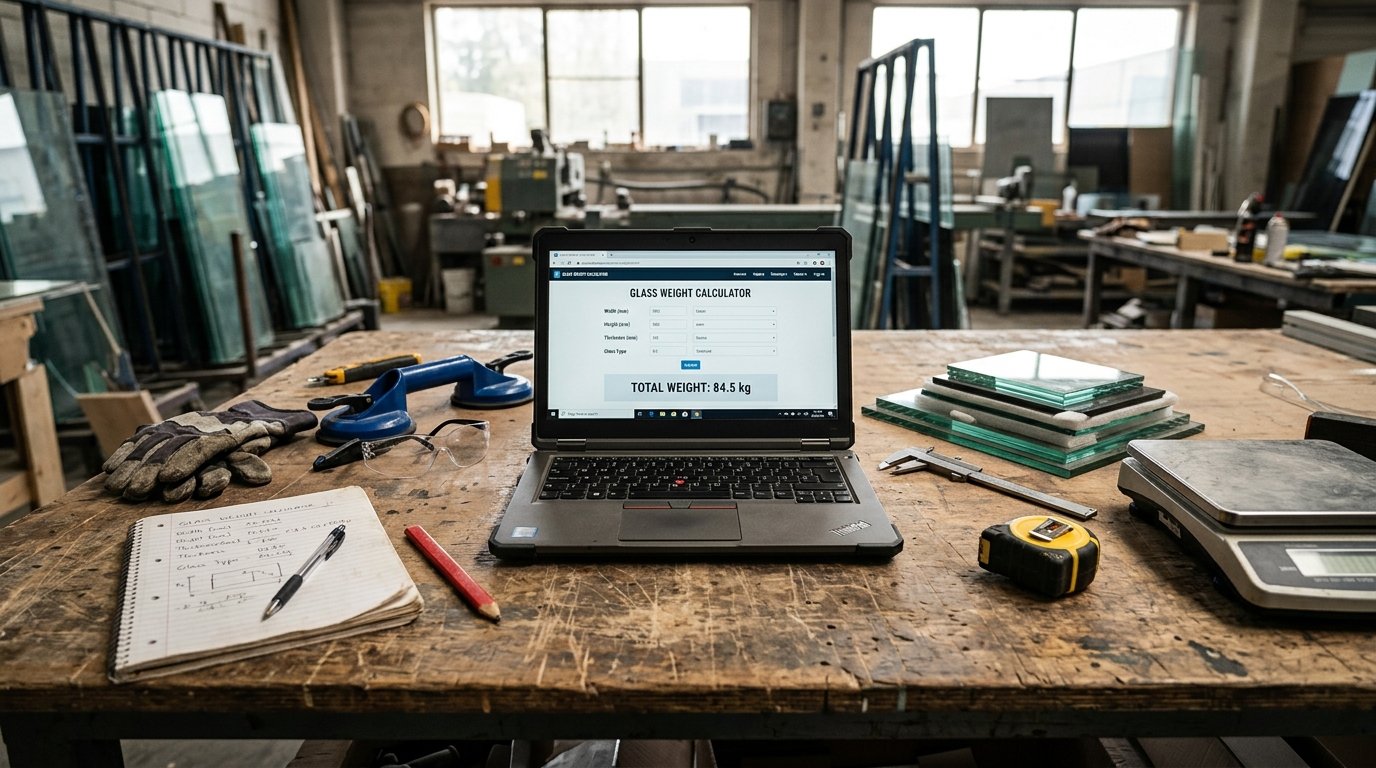
Glass Weight Calculator: Estimate Mass of Glass Panes Accurately
Glass is one of the most beautiful and functional materials in modern construction, but it is also one of the heaviest. A single square meter of 6 mm glass weighs approximately 15 kg. A large double glazed unit can easily exceed 50 kg. Triple glazed units are even heavier. If you underestimate the weight of glass, you risk damaging frames, overloading hardware, injuring installers, or wasting money on unnecessary structural reinforcement. If you overestimate, you may over-engineer the support system or choose thicker glass than necessary.
Our Glass Weight Calculator is a free online tool that takes the guesswork out of glass mass estimation. It helps you calculate the weight of single, double, and triple glazed panes based on dimensions, thickness, glass type, and density. It also provides glass volume, overall unit thickness, and number of panes per unit. Whether you are a glazier, builder, architect, or DIYer, this calculator gives you the numbers you need to plan safely and efficiently.
In this guide, we will show you how to use the calculator, explain each input and output, provide real-world examples, and answer common questions. We will also share tips to ensure your glass installation is safe, compliant, and cost-effective.
Glass Weight
Construction CalculatorGlass weight: mass of a pane from dimensions, thickness and glass type.
What is the Glass Weight Calculator?
The Glass Weight Calculator is a free online tool that calculates the mass of glass panes. It supports single, double, and triple glazing constructions. You can enter pane width, height, number of units, glass type (annealed, toughened, laminated, low-E, acoustic), thickness (3 mm to 16 mm), and glass density. The calculator returns:
- Glass area per unit
- Overall unit thickness
- Panes per unit
- Number of units
- Glass volume per unit
- Total glass volume
- Glass weight per unit
- Total glass weight
The tool is part of a suite of materials and quantities calculators available on our website. For related calculations, you can use our Glass Thickness Selection Calculator, Window U-Value Calculator, Glazing Area (Windows) Calculator, and Double / Triple Glazed Unit Sizing Calculator.
Why Glass Weight Matters
Glass weight is not just a number—it affects every stage of a project, from design to installation. Here is why accurate weight estimation is essential.
Structural Loads
Glass is heavy, and its weight must be supported by frames, mullions, transoms, and the building structure. If the glass is heavier than the frame can handle, the frame may deflect, twist, or fail. In curtain walling and structural glazing, weight is a critical design parameter.
Handling and Installation
Glass panes are awkward to handle. A 1 m × 1.4 m pane of 6 mm glass weighs about 21 kg—manageable for two people. But a double glazed unit of the same size weighs over 40 kg. Triple glazing can exceed 60 kg. Knowing the weight helps you plan lifting equipment, suction cups, and the number of installers required.
Hardware and Fixings
Hinges, handles, locks, and mounting brackets are rated for specific loads. If you exceed those loads, hardware may fail, causing injury or property damage. Weight calculations help you select the right hardware.
Shipping and Logistics
Glass is often shipped long distances. Weight affects freight costs, packaging requirements, and vehicle loading. Accurate weight estimation prevents overloading and reduces shipping costs.
Safety
Glass is fragile. Heavy panes are more difficult to handle and more dangerous if they break. Knowing the weight helps you plan safe handling procedures and use appropriate personal protective equipment.
Cost
Glass is priced per square meter, but weight affects the cost of frames, hardware, transport, and installation. In some cases, reducing weight can reduce overall project cost.
For more information on glass standards, you can refer to Wikipedia’s article on architectural glass or the Glass and Glazing Federation (GGF).
How to Use the Glass Weight Calculator
Using the calculator is straightforward. Here is a breakdown of each field.
1. Pane Dimensions
- Pane width: Enter the width of one pane in meters or inches.
- Pane height: Enter the height of one pane in meters or inches.
- Number of units: Enter the total number of identical units. The calculator multiplies weight and volume by this count.
2. Glass Type
- Glass type: Select annealed float glass, toughened, laminated, low-E coated, or acoustic laminated. This affects the weight through the type adjustment factor. Laminated and acoustic glass include interlayers that add mass. Low-E coatings add a negligible amount. Toughened glass has the same density as annealed glass.
3. Thickness
- Thickness: Select the thickness of each pane: 3 mm, 4 mm, 6 mm, 8 mm, 10 mm, 12 mm, or 16 mm. Thicker glass is heavier and stronger.
4. Glazing Construction
- Glazing construction: Select single pane, double glazed (IGU), or triple glazed. This determines how many panes are in each unit and the cavity thickness. Double glazing has two panes and one cavity; triple glazing has three panes and two cavities. The calculator uses a nominal cavity of 12 mm for double and 24 mm total for triple, which is typical for overall unit thickness.
5. Density
- Glass density: Enter the density of glass in kg/m³. Float glass is approximately 2500 kg/m³. Check with your supplier for specialty glass. This value is used for mass calculation.
Once you enter all values, the calculator instantly displays glass area per unit, overall unit thickness, panes per unit, number of units, glass volume per unit, total glass volume, glass weight per unit, and total glass weight.
Understanding the Calculations
To make the most of the calculator, it is important to understand each output and the underlying formulas.
- Glass area per unit: width × height.
- Overall unit thickness: (thickness × panes per unit) + cavity. For single glazing, no cavity. For double glazing, cavity = 12 mm. For triple glazing, cavity = 24 mm.
- Panes per unit: 1 for single, 2 for double, 3 for triple.
- Glass volume per unit: area × (thickness × panes per unit). This is the total volume of glass in one unit, excluding cavities.
- Total glass volume: volume per unit × number of units.
- Glass weight per unit: volume per unit × density × type factor.
- Total glass weight: weight per unit × number of units.
The type factor adjusts for interlayers and coatings:
- Annealed: 1.00
- Toughened: 1.00
- Laminated: 1.08 (8% extra for interlayer)
- Low-E: 1.02 (2% extra for coating)
- Acoustic: 1.12 (12% extra for acoustic interlayer)
These factors are approximate. For precise weight, consult your glass supplier.
Understanding these components helps you interpret the results and plan your project. For more information on glass design standards, you can refer to Wikipedia’s article on architectural glass or the National Fenestration Rating Council (NFRC).
Example Calculations
Let’s run through two examples to see how the calculator works in different scenarios.
Example 1: Single Pane, 1.0 m × 1.4 m, 6 mm Annealed Glass, 10 Units
Inputs:
- Pane width: 1.0 m
- Pane height: 1.4 m
- Number of units: 10
- Glass type: Annealed
- Thickness: 6 mm
- Glazing construction: Single
- Density: 2500 kg/m³
Calculations:
- Area per unit = 1.0 × 1.4 = 1.4 m²
- Panes per unit = 1
- Glass thickness per unit = 0.006 m
- Overall unit thickness = 0.006 m = 6 mm
- Volume per unit = 1.4 × 0.006 = 0.0084 m³
- Total volume = 0.0084 × 10 = 0.084 m³
- Type factor = 1.00
- Weight per unit = 0.0084 × 2500 × 1.00 = 21.0 kg
- Total weight = 21.0 × 10 = 210 kg
Result: Each pane weighs 21 kg. The total order weighs 210 kg.
Example 2: Double Glazed Unit, 1.2 m × 1.4 m, 4 mm Toughened Glass, 5 Units
Inputs:
- Pane width: 1.2 m
- Pane height: 1.4 m
- Number of units: 5
- Glass type: Toughened
- Thickness: 4 mm
- Glazing construction: Double
- Density: 2500 kg/m³
Calculations:
- Area per unit = 1.2 × 1.4 = 1.68 m²
- Panes per unit = 2
- Glass thickness per unit = 0.004 × 2 = 0.008 m
- Cavity = 0.012 m
- Overall unit thickness = 0.008 + 0.012 = 0.020 m = 20 mm
- Volume per unit = 1.68 × 0.008 = 0.01344 m³
- Total volume = 0.01344 × 5 = 0.0672 m³
- Type factor = 1.00 (toughened)
- Weight per unit = 0.01344 × 2500 × 1.00 = 33.6 kg
- Total weight = 33.6 × 5 = 168 kg
Result: Each double glazed unit weighs 33.6 kg. The total order weighs 168 kg.
Example 3: Triple Glazed Unit, 0.9 m × 2.0 m, 6 mm Laminated Glass, 4 Units
Inputs:
- Pane width: 0.9 m
- Pane height: 2.0 m
- Number of units: 4
- Glass type: Laminated
- Thickness: 6 mm
- Glazing construction: Triple
- Density: 2500 kg/m³
Calculations:
- Area per unit = 0.9 × 2.0 = 1.8 m²
- Panes per unit = 3
- Glass thickness per unit = 0.006 × 3 = 0.018 m
- Cavity = 0.024 m
- Overall unit thickness = 0.018 + 0.024 = 0.042 m = 42 mm
- Volume per unit = 1.8 × 0.018 = 0.0324 m³
- Total volume = 0.0324 × 4 = 0.1296 m³
- Type factor = 1.08 (laminated)
- Weight per unit = 0.0324 × 2500 × 1.08 = 87.48 kg
- Total weight = 87.48 × 4 = 349.92 kg
Result: Each triple glazed unit weighs approximately 87.5 kg. The total order weighs nearly 350 kg—a significant load that requires careful handling and structural support.
These examples show how dimensions, thickness, glazing construction, and glass type affect weight.
Benefits of Using the Glass Weight Calculator
Tips for Accurate Glass Weight Estimation
- Measure the pane accurately: Double-check width and height. For irregular shapes, consult a glazier.
- Choose the right thickness: Thicker glass is heavier and stronger. Use our Glass Thickness Selection Calculator to select the right thickness for your application.
- Consider glazing construction: Double and triple glazing add significant weight. If weight is a concern, consider single glazing where thermal performance allows.
- Account for interlayers: Laminated and acoustic glass are heavier than annealed or toughened glass of the same thickness.
- Check density: Float glass is approximately 2500 kg/m³. Specialty glass may differ. Verify with your supplier.
- Include frames and hardware: Glass weight is only part of the load. Frames, hardware, and fixings add weight and must be considered.
- Plan for handling: Use suction cups, lifting frames, and enough personnel for heavy panes.
- Verify with a professional: For large or complex projects, have a structural engineer verify the design and loads.
- Use the calculator for multiple units: Enter the number of units to get total weight for the order.
- Check shipping limits: Ensure vehicles and containers can carry the total weight.
For more information on glass standards, you can refer to Wikipedia’s article on architectural glass or the Glass and Glazing Federation (GGF).
Common Mistakes to Avoid
- Forgetting to multiply by the number of units. The calculator does this for you, but if you calculate manually, double-check.
- Using the wrong thickness. Thickness has a linear effect on weight. A 12 mm pane weighs twice as much as a 6 mm pane.
- Ignoring glazing construction. A double glazed unit has two panes, so it weighs roughly twice as much as a single pane of the same thickness (plus cavity).
- Underestimating interlayer weight. Laminated and acoustic glass can be 8–12% heavier than annealed glass.
- Using the wrong density. Not all glass has the same density. Check with your supplier.
- Confusing area and volume. Weight is based on volume, not area. A larger pane with the same thickness weighs more.
- Not accounting for cavities. Cavities add to overall unit thickness but not to glass weight. The calculator handles this correctly.
- Skipping professional verification. For structural glazing, always consult an engineer.
How to Reduce Glass Weight
If your glass is too heavy for your frame, hardware, or handling equipment, here are ways to reduce weight without compromising safety:
- Reduce thickness. Use the minimum thickness required for the span and load. Use our Glass Thickness Selection Calculator to find the right thickness.
- Use single glazing instead of double or triple. Single glazing is lighter but less thermally efficient. Consider this only if thermal performance is not critical.
- Reduce pane size. Smaller panes require thinner glass and weigh less.
- Choose annealed or toughened glass instead of laminated. Laminated glass is heavier due to interlayers.
- Avoid acoustic glass if not needed. Acoustic laminated glass is heavier than standard laminated glass.
- Optimize frame design. Use stronger, lighter frame materials (e.g., aluminium) to compensate for glass weight.
- Distribute weight. Use more mullions and transoms to share the load.
- Consult a structural engineer. They can help you optimize the design for weight and safety.
Frequently Asked Questions (FAQ)
Conclusion
The Glass Weight Calculator is an essential tool for glaziers, builders, architects, and DIYers. It helps you estimate the weight of single, double, and triple glazed panes from dimensions, thickness, glass type, and density. Accurate weight estimation ensures safe handling, correct structural design, and cost-effective material selection.
Whether you are replacing a single window pane or specifying a full curtain wall, knowing the weight of your glass is key to a successful project. Try the Glass Weight Calculator today and take the guesswork out of your glazing specification.



One Comment